

Cockroach Trap Drains Explained
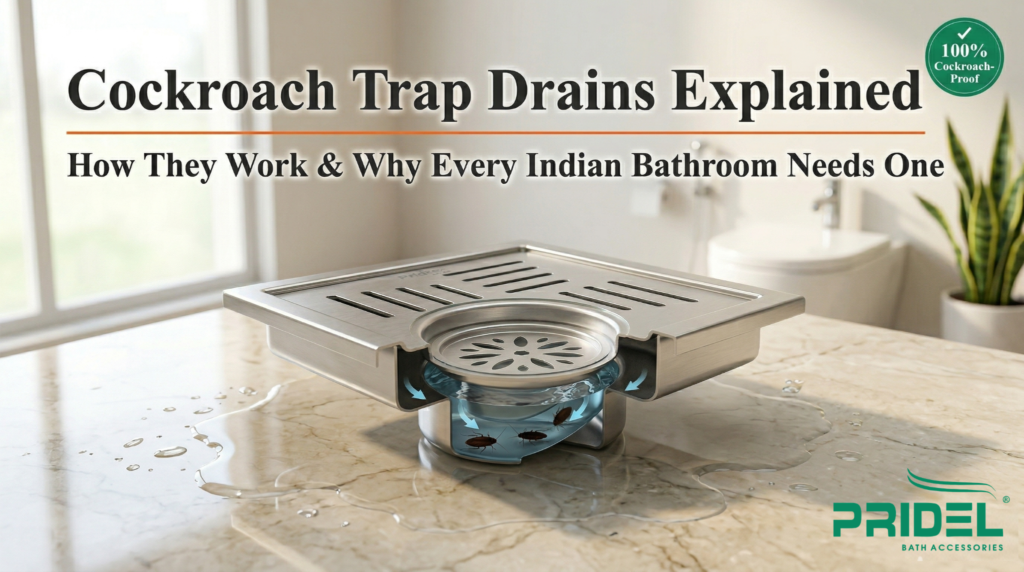
You’ve cleaned the bathroom. The tiles are spotless, the floor is dry, and everything smells fresh. But by morning, a cockroach has appeared near the drain — again. In Indian homes, this is one of the most common and frustrating bathroom problems. Most people reach for a pesticide spray and consider it solved. But the cockroach didn’t come through the window. It came up through the drain — and it will keep coming back until the drain itself is designed to stop it. The solution isn’t more chemicals. It’s the right floor drain. This guide explains exactly how cockroach trap drains work, what separates a genuinely effective trap from a basic strainer, and how to choose the right drain for your bathroom — whether you’re building new, renovating, or looking for a retrofit fix. Why Cockroaches Enter Through Bathroom Drains in Indian Homes Drain-entry is a bigger problem in India than in most other countries, and for very specific reasons. Understanding these reasons is the first step to fixing the problem properly. Wet Bathroom Culture In India, bathrooms are fully wet spaces. Bucket baths, hand showers, floor washing — drains are active multiple times a day, every day. Each time water drains, the internal water seal that normally blocks pests can partially evaporate if the drain quality is poor or the design is outdated. A drain that isn’t built with a mechanical barrier relies entirely on that water seal. Once it breaks — especially in a guest bathroom or balcony drain that isn’t used every day — the drain becomes an open pipe connected directly to the sewer below. Shared Drainage Stacks in Apartments In multistorey apartment buildings, a single vertical drainage pipe connects bathrooms across multiple floors. One floor’s pest problem can become the entire building’s problem. Cockroaches travel upward through these stacks and enter homes through any drain that lacks an effective barrier — regardless of how clean the individual apartment is. Hard Water and Sediment Buildup India’s hard water leaves mineral deposits inside drains over time. In low-quality drains, this sediment can damage or degrade the water seal mechanism, opening microscopic gaps that are more than enough for pests to exploit. A stainless steel drain body resists this — but if the internal trap design is poor, the hard water eventually wins. Monsoon Season Backflow Pressure During heavy monsoon rains, pressure builds up in urban drainage systems. This can create a temporary backflow effect, pushing air — and the pests in it — upward through drains that lack a mechanical closure. Drains with only a passive water seal are particularly vulnerable during these pressure spikes. Year-Round Warm Climate Unlike colder countries where pest populations naturally reduce in winter, India’s climate supports cockroach activity throughout the year. There is no seasonal break. The pressure on your drains is constant — which means the drain’s pest-blocking mechanism needs to work reliably 365 days a year, not just occasionally. The Mechanism Explained: What Happens Inside a Cockroach Trap Drain Not all drains with the word “trap” in their name work the same way. There are two fundamentally different mechanisms — and understanding the difference matters when you’re choosing a drain. The Water Seal (Traditional Trap) The traditional approach is a water seal — a P-trap or S-trap built below the drain body that holds a small column of standing water. This water physically blocks sewer gas and pests from travelling upward into the bathroom. It works well — when the water is there. The critical weakness is evaporation. In any drain that isn’t used regularly — a guest bathroom, a balcony drain, a utility room — the standing water slowly evaporates over days or weeks. Once the seal is gone, the drain is essentially an open pipe. No barrier. No protection. This is why you’ll often notice drain odours and pest activity in rooms that “aren’t used much.” The water seal has dried out, and nothing is stopping what comes up from below. The Mechanical Cockroach Barrier Modern cockroach trap drains add a second line of defence: a mechanical closure that doesn’t depend on water being present. Here’s how it works: A spring-loaded or gravity-activated flap is fitted inside the drain body, below the strainer level When water flows — during a bath or floor wash — the weight and pressure of the water pushes the flap open, and water drains freely as normal When water stops, the flap closes automatically under its own weight or spring tension The closed flap creates a physical seal across the drain opening — blocking insects, sewer gas, and debris from travelling upward Better designs add a fine mesh layer above the flap, catching hair and debris before they reach the mechanism The key advantage over a pure water seal: this mechanism works even if the drain hasn’t been used for a week. The flap is closed by default. Water opens it; no water means it stays shut. What to look for when buying: Turn the drain upside down or look into the drain body from below. You should be able to see a small internal flap, valve, or hinged cover. If you only see a flat mesh with no moving parts, what you have is a basic strainer — not a cockroach trap. A strainer catches debris but does nothing to stop pests or odours. Built-In Cockroach Trap vs Add-On Trap Bowl: What’s the Difference? When you shop for cockroach trap drains, you’ll come across two different approaches. Both can work — but they’re not equal, and they suit different situations. Built-In Trap (Pridel PR-100 to PR-600) Add-On Trap Bowl Integration Engineered as part of the drain body — one unit A separate component inserted below the main drain Seal quality Consistent — no joint gaps between drain and trap Depends on how precisely it’s fitted at installation Maintenance Clean the drain cover only Must remove and clean the trap bowl separately Long-term reliability Higher — fewer components, no separate part to