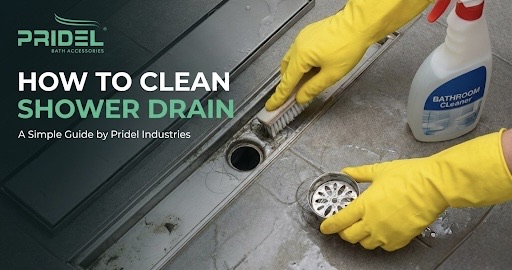
A clear, step-by-step routine with simple household products (baking soda, vinegar, hot water, and basic tools) is usually enough to clean and maintain a shower drain effectively.
What Causes Shower Drains To Block?
Hair catching on the inside of the drain and pipes, creating a net that traps more debris.What You
Soap scum and shampoo residue sticking to hair and the pipe walls, gradually forming a sticky sludge.
Hard-water limescale that narrows the pipe and makes it easier for dirt to cling.
Dirt, sand and skin oils washing off your body and adding to the buildup over time.
What You’ll Need
Most shower drains can be cleaned with simple items you already have at home.
Rubber gloves and an old cloth or sponge
Small screwdriver (if your drain cover is screwed down)
Tweezers or needle-nose pliers for hair removal
Kettle or pan for hot water
Baking soda (bicarbonate of soda) and white vinegar
Optional: a plastic drain snake or zip tool for deeper clogs
Step-By-Step: How To Clean A Shower Drain
1. Remove the drain cover
Unscrew or lift off the drain cover or grate, depending on your shower design.
Rinse the cover in warm, soapy water and gently scrub away any soap scum or limescale.
2. Manually clear hair and debris
Put on gloves and use your fingers, tweezers or pliers to pull out visible hair and gunk from the drain opening.
For deeper build-up, insert a plastic drain snake, twist, and pull it back up to catch hidden clumps.
3. Flush with hot water
Boil a kettle and carefully pour hot (not always boiling, if you have plastic pipes) water slowly down the drain to soften soap and grease.
Let it run through for a minute to help shift loosened buildup further down the pipe.
4. Use a baking soda and vinegar treatment
Pour about 100 g (roughly half a cup) of baking soda directly into the drain.
Follow with a cup of white vinegar and let the fizzing reaction work for 10-15 minutes to break down soap scum and neutralise odours.
5. Rinse thoroughly
After the fizzing stops, flush the drain again with hot water to wash away the loosened residue.
Run the shower for a minute to check that the water drains quickly and that any smells have gone.
Natural Vs Chemical Cleaners
Natural methods like baking soda, vinegar and hot water are usually enough for regular maintenance and light blockages, and they are kinder to your pipes and the environment.
Strong chemical drain unblockers should be a last resort, as repeated use can damage some pipe materials and finishes around the drain.
If the water is still standing or draining extremely slowly after trying the above steps, a professional plumber may need to clear a deeper blockage.
How To Prevent Future Shower Drain Clogs
A little weekly maintenance keeps your shower drain clean and odour-free.
Use a drain cover or hair catcher to stop hair going down the drain in the first place, and empty it after each shower.
Once a week, pour a kettle of hot water down the drain to rinse away early soap and oil build-up.
Once a month, use a quick baking soda and vinegar treatment to keep pipes clear and prevent smells.
Avoid washing large amounts of sand, mud, or pet hair down the shower – rinse these off outside where possible.