Why Choosing the Right Shower and Shower Arm Matters in Large Projects

When specifying bathroom fixtures for a 100-room hotel or a 30-storey residential tower, the shower and shower arm are no longer just accessories—they become critical components that impact guest satisfaction, maintenance costs, and your project’s reputation. Why Shower Systems Matter in Hospitality and Real Estate In hotels, resorts, and premium housing, the bathroom is where quality perception is formed. A well-designed rain shower with the correct arm height, flow rate, and coverage creates a memorable experience that influences online reviews, property valuations, and repeat bookings. Poor shower selection compounds across hundreds of units: low water pressure, improper arm length, rust formation, and leaking joints lead to escalating complaints and service calls. The Role of the Shower Arm The shower arm is the bridge between concealed plumbing and the shower head. Its length, angle, material grade, and mounting design directly affect: • Coverage area and water distribution • User comfort and ergonomics • Installation compatibility with ceiling height and wall depth • Long-term durability in high-humidity and coastal environments Professional specifications demand wall-mounted, ceiling, or extended arms matched to project requirements—ensuring consistent performance across every bathroom. Material Quality: The Foundation of Performance In large-scale projects, material selection determines lifecycle cost. Premium shower systems specify: • Stainless steel (SS304/SS316) for corrosion resistance in humid and coastal zones • Precision threading and robust wall thickness to prevent leaks and joint failure • Durable surface finishes (chrome, PVD, matte black) engineered for daily cleaning and hard water Cheap alternatives may pass initial inspection but fail within months—resulting in callback costs, water damage, and tenant dissatisfaction that far exceed the savings. What B2B Buyers and Consultants Should Evaluate Professional procurement for hotels, high-rises, and villas requires systematic evaluation: Technical fit: Water pressure compatibility, arm length matched to shower area layout, stable mounting for overhead systems Quality assurance: High-grade stainless steel, corrosion-resistant finishes, precision manufacturing with documented testing Project support: Consistent supply at scale, customization for branding and design, proper packaging and export documentation Partnering with Indian Manufacturing Excellence India’s specialized bathroom fittings manufacturers now serve global hospitality and construction markets with export-grade quality, competitive lead times, and engineering support. For B2B buyers, selecting a manufacturer with proven project experience reduces risk and ensures smooth execution. Pridel Industries manufactures premium SS304/SS316 showers, shower arms, and bathroom accessories from Rajkot, Gujarat—supporting architects, MEP consultants, and developers across domestic and international projects. Our focus on material quality, precision engineering, and scalable supply makes us a trusted partner for hotels, high-rises, and luxury villas. Conclusion In large projects, showers and shower arms are high-impact fixtures that define user experience and operational efficiency. Choosing the right system—with the correct material, design, and manufacturing partner—protects your investment and delivers consistent five-star performance across every bathroom.
Round vs Linear Floor Drains: A Complete Buying Guide for Modern Bathrooms in 2026

When you’re renovating your bathroom or building a new one, choosing the right floor drain might not seem like a big deal—but trust me, it is. I’ve seen so many people struggle with this decision, so let me break it down for you in simple terms. Round vs Linear Drains: What’s the Difference? Think of round drains as the classic option. They’re those circular grates you see in most bathrooms—simple, effective, and been around forever. Linear drains? They’re the sleek, modern alternative. Picture a long, rectangular channel that runs along your shower floor or near the wall. Here’s the thing: both work perfectly fine. The real question is which one fits YOUR bathroom better. Why I’d Choose Round Drains Look, if you’re on a budget or doing a quick bathroom upgrade, round drains are your friend. They’re: Way cheaper (usually ₹500-2,000 vs ₹3,000-15,000 for linear) Super easy to install—any plumber can do it Perfect for existing bathrooms where you don’t want major floor work Easy to find replacement parts I always tell people: if your bathroom has a traditional vibe or you’re working with a tight budget, stick with round. No shame in that—they’ve worked for decades for a reason! When Linear Drains Make Sense Now, if you’re building from scratch or going for that luxury spa look, linear drains are pretty amazing. Here’s why I love them: They look incredibly modern and clean You can use those beautiful large-format tiles without awkward cuts Perfect for barrier-free, walk-in showers (great for accessibility) Handle water flow like a boss—ideal for rain showers Easier to clean once they’re in But real talk? They cost more and need proper installation. If your contractor hasn’t done linear drains before, that’s a red flag. My Honest Recommendations Go with Round Drains if: You’re renovating an existing bathroom Budget is a concern (and hey, that’s totally valid) You want something tried and tested Your bathroom has a classic or traditional style Choose Linear Drains if: You’re building new or doing a complete overhaul You want that modern, minimalist aesthetic You’re planning a curbless shower design Budget isn’t your main constraint Quick Tips Before You Buy Material Matters: Always go for stainless steel (SS304 or SS316). India’s humidity will destroy cheap plastic or low-grade metal in no time. Trust me on this one. Think About Flow: If you have a powerful rain shower or multiple shower heads, make sure your drain can handle the water volume. Nothing worse than standing in a pool while showering! Don’t Skip the Trap: Make sure whichever drain you choose has a proper odour trap. You do NOT want sewer smells coming up. Been there, smelled that—not fun. Common Mistakes People Make I’ve seen people mess this up, so learn from their mistakes: Buying the cheapest option and regretting it within a year Installing linear drains in existing floors without proper waterproofing (disaster waiting to happen) Not checking if their plumber actually knows how to install linear drains properly Forgetting about maintenance access The Bottom Line Honestly? Both types work great if installed properly. Round drains are reliable workhorses that won’t let you down. Linear drains are the premium choice if you’re going for that wow factor. What matters most is getting quality materials and proper installation. A well-installed round drain beats a poorly installed linear drain any day of the week. If you’re still unsure, send us a message or check out our range at Pridel Industries. We’ve been making quality bathroom drainage solutions since 2018, and we’re always happy to help you figure out what works best for your space. Happy renovating! 🚿
How Cockroach Trap Drains Protect Your Bathroom from Pests and Bad Odour

Struggling with cockroaches crawling from floor drains or persistent sewer smells? The problem isn’t just poor cleaning—it’s your drain design. Cockroach trap drains create engineered barriers that block pests and odours while allowing water to flow freely, making them essential for ground-floor flats, hotels, and commercial washrooms. What Makes Cockroach Trap Drains Different? Unlike standard floor drains, cockroach trap drains feature integrated trap mechanisms—water-filled bowls or mechanical flaps—that physically prevent pests and sewer gases from entering through drainage lines. Two Core Protection Systems: Water Seal: Standing water creates an airtight barrier blocking methane, hydrogen sulfide, and drainage gases Physical Barrier: Internal walls and strategic inlet/outlet positioning stop cockroaches and insects from climbing up pipes Three Essential Cockroach Trap Designs 1. Single Bowl Trap (Standard Protection) A removable stainless steel bowl maintains a permanent water layer that blocks odours and pests between uses. Water fills the bowl first, then overflows to the drainpipe, leaving a residual seal. Best For: Regular residential bathrooms with daily use where water won’t dry out. 2. Double Bowl Trap (PR-117 Series) Two internal chambers provide redundant protection and superior debris management. Hair and solids settle in the outer bowl while the inner bowl maintains a stable water seal. Key Advantages: Even if outer bowl dries, inner bowl often maintains the seal Easy removal for periodic deep-cleaning 0.5mm bowl thickness, 1.2mm tray in SS 304/202 Best For: High-traffic hotel washrooms, gym showers, mall restrooms, and commercial facilities with heavy use. 3. Auto-Close Trap (PR-109 & PR-151) The most advanced design adds a gravity-operated flap that mechanically seals the drain when water stops flowing. This provides fail-safe protection even when water evaporates completely. How It Works: At Rest: Flip lid stays closed, blocking drain mechanically During Use: Water pressure opens flap for drainage After Use: Gravity closes flap, restoring dual seal Best For: Ground-floor flats near sewer lines, hotel guest bathrooms with intermittent use, and offices with weekend closures. Quick Selection Guide Application Recommended Solution Why Ground-floor apartments PR-109 Auto Close Mechanical backup prevents pest/odour infiltration from municipal sewers Hotel guest rooms PR-109 or PR-151 retrofit Ensures odour-free rooms even after days of vacancy Staff areas & heavy use PR-117 Double Bowl Two-stage seal handles frequent cleaning and debris Malls & airports PR-117 heavy-duty variant Robust construction resists high footfall and vandalism Existing drain upgrades PR-151 modular bowl Drop-in retrofit without floor demolition Why Cockroach Trap Drains Are Essential Permanent Pest Control Unlike sprays or gels requiring re-application, integrated trap mechanisms provide passive, chemical-free protection 24/7. In multifamily buildings, sealed traps prevent drainage systems from becoming pest highways between units. Odour Elimination Ground-floor properties and intermittent-use facilities face constant sewer gas pressure. Auto-close and double bowl designs maintain protection throughout dry periods, eliminating the #1 bathroom complaint in hotels and commercial spaces. Hygiene & Safety Stainless steel construction (SS 304/202) resists corrosion and bacterial growth. Smooth surfaces enable effective chemical disinfection—critical for hotels, hospitals, and food-service areas where a single pest sighting triggers violations. Installation Best Practices When specifying Pridel cockroach trap drains: Match trap type to usage pattern (auto-close for intermittent use, double bowl for heavy traffic) Verify 75-100mm floor depth clearance Ensure trap flanges integrate with waterproofing systems Plan accessible locations for bowl removal and maintenance Why Choose Pridel Cockroach Trap Drains? ✓ Graded material options (Elite/Ultra/Premium) for every budget ✓ Modular designs making maintenance faster and less expensive ✓ Auto-close technology providing fail-safe protection when seals dry ✓ Complete size range from 127×127mm residential to 150×150mm commercial Protect Your Property—Permanently The right cockroach trap drain eliminates odour complaints, prevents infestations, and protects your reputation. Whether retrofitting a ground-floor flat or specifying drains for a new hotel, Pridel has the engineered solution. Ready to upgrade your drainage protection? 👉 Explore Pridel’s Complete Range 👉 Contact our technical team for project recommendations
How To Clean Shower Drains: Complete Guide for Indian Homeowners
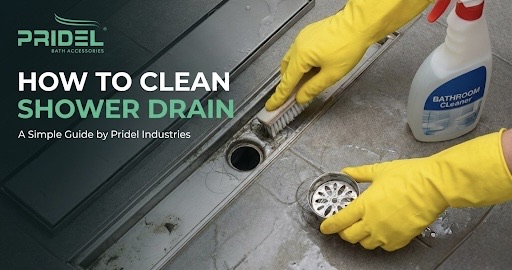
A clear, step-by-step routine with simple household products (baking soda, vinegar, hot water, and basic tools) is usually enough to clean and maintain a shower drain effectively. What Causes Shower Drains To Block? Hair catching on the inside of the drain and pipes, creating a net that traps more debris.What You Soap scum and shampoo residue sticking to hair and the pipe walls, gradually forming a sticky sludge. Hard-water limescale that narrows the pipe and makes it easier for dirt to cling. Dirt, sand and skin oils washing off your body and adding to the buildup over time. What You’ll Need Most shower drains can be cleaned with simple items you already have at home. Rubber gloves and an old cloth or sponge Small screwdriver (if your drain cover is screwed down) Tweezers or needle-nose pliers for hair removal Kettle or pan for hot water Baking soda (bicarbonate of soda) and white vinegar Optional: a plastic drain snake or zip tool for deeper clogs Step-By-Step: How To Clean A Shower Drain 1. Remove the drain cover Unscrew or lift off the drain cover or grate, depending on your shower design. Rinse the cover in warm, soapy water and gently scrub away any soap scum or limescale. 2. Manually clear hair and debris Put on gloves and use your fingers, tweezers or pliers to pull out visible hair and gunk from the drain opening. For deeper build-up, insert a plastic drain snake, twist, and pull it back up to catch hidden clumps. 3. Flush with hot water Boil a kettle and carefully pour hot (not always boiling, if you have plastic pipes) water slowly down the drain to soften soap and grease. Let it run through for a minute to help shift loosened buildup further down the pipe. 4. Use a baking soda and vinegar treatment Pour about 100 g (roughly half a cup) of baking soda directly into the drain. Follow with a cup of white vinegar and let the fizzing reaction work for 10-15 minutes to break down soap scum and neutralise odours. 5. Rinse thoroughly After the fizzing stops, flush the drain again with hot water to wash away the loosened residue. Run the shower for a minute to check that the water drains quickly and that any smells have gone. Natural Vs Chemical Cleaners Natural methods like baking soda, vinegar and hot water are usually enough for regular maintenance and light blockages, and they are kinder to your pipes and the environment. Strong chemical drain unblockers should be a last resort, as repeated use can damage some pipe materials and finishes around the drain. If the water is still standing or draining extremely slowly after trying the above steps, a professional plumber may need to clear a deeper blockage. How To Prevent Future Shower Drain Clogs A little weekly maintenance keeps your shower drain clean and odour-free. Use a drain cover or hair catcher to stop hair going down the drain in the first place, and empty it after each shower. Once a week, pour a kettle of hot water down the drain to rinse away early soap and oil build-up. Once a month, use a quick baking soda and vinegar treatment to keep pipes clear and prevent smells. Avoid washing large amounts of sand, mud, or pet hair down the shower – rinse these off outside where possible.
How To Clean Shower Drains: Complete Guide for Indian Homeowners
A clear, step-by-step routine with simple household products (baking soda, vinegar, hot water, and basic tools) is usually enough to clean and maintain a shower drain effectively. What Causes Shower Drains To Block? Hair catching on the inside of the drain and pipes, creating a net that traps more debris.What You Soap scum and shampoo residue sticking to hair and the pipe walls, gradually forming a sticky sludge. Hard-water limescale that narrows the pipe and makes it easier for dirt to cling. Dirt, sand and skin oils washing off your body and adding to the buildup over time. What You’ll Need Most shower drains can be cleaned with simple items you already have at home. Rubber gloves and an old cloth or sponge Small screwdriver (if your drain cover is screwed down) Tweezers or needle-nose pliers for hair removal Kettle or pan for hot water Baking soda (bicarbonate of soda) and white vinegar Optional: a plastic drain snake or zip tool for deeper clogs Step-By-Step: How To Clean A Shower Drain 1. Remove the drain cover Unscrew or lift off the drain cover or grate, depending on your shower design. Rinse the cover in warm, soapy water and gently scrub away any soap scum or limescale. 2. Manually clear hair and debris Put on gloves and use your fingers, tweezers or pliers to pull out visible hair and gunk from the drain opening. For deeper build-up, insert a plastic drain snake, twist, and pull it back up to catch hidden clumps. 3. Flush with hot water Boil a kettle and carefully pour hot (not always boiling, if you have plastic pipes) water slowly down the drain to soften soap and grease. Let it run through for a minute to help shift loosened buildup further down the pipe. 4. Use a baking soda and vinegar treatment Pour about 100 g (roughly half a cup) of baking soda directly into the drain. Follow with a cup of white vinegar and let the fizzing reaction work for 10-15 minutes to break down soap scum and neutralise odours. 5. Rinse thoroughly After the fizzing stops, flush the drain again with hot water to wash away the loosened residue. Run the shower for a minute to check that the water drains quickly and that any smells have gone. Natural Vs Chemical Cleaners Natural methods like baking soda, vinegar and hot water are usually enough for regular maintenance and light blockages, and they are kinder to your pipes and the environment. Strong chemical drain unblockers should be a last resort, as repeated use can damage some pipe materials and finishes around the drain. If the water is still standing or draining extremely slowly after trying the above steps, a professional plumber may need to clear a deeper blockage. How To Prevent Future Shower Drain Clogs A little weekly maintenance keeps your shower drain clean and odour-free. Use a drain cover or hair catcher to stop hair going down the drain in the first place, and empty it after each shower. Once a week, pour a kettle of hot water down the drain to rinse away early soap and oil build-up. Once a month, use a quick baking soda and vinegar treatment to keep pipes clear and prevent smells. Avoid washing large amounts of sand, mud, or pet hair down the shower – rinse these off outside where possible.